The complete ceremony
Shraddha
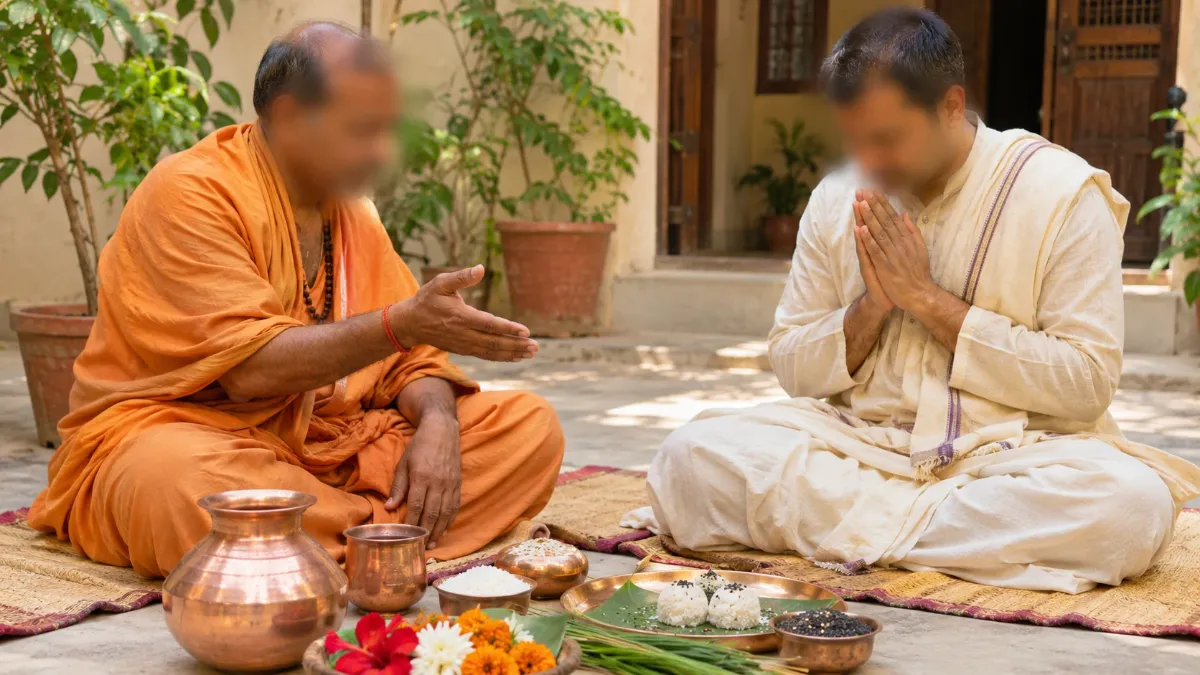
A formal rite of ancestral remembrance. It may bring together prayers, offerings, a meal and dakshina according to the family tradition.

Ritual guide, sacred places and dos and don'ts. Understand Shraddha, Tarpan and Pind Daan with clear guidance for your family.
Understanding the tradition
Pitru Paksha is a period of the Hindu year for remembering departed family members. Families offer prayers, water and food in their memory. Many also serve meals or give useful things to people in need. The purpose is to express gratitude and keep a connection with the generations who came before us.
Pitru means ancestor and paksha means a lunar fortnight. The period falls during the waning Moon. It is called Ashwin Krishna Paksha in the Purnimanta calendar and Bhadrapada Krishna Paksha in the Amanta calendar. These names refer to the same season of remembrance. Mahalaya Paksha is another widely used name.
Many Hindu traditions speak of Pitru Rina, the responsibility towards parents and ancestors. Remembering their names, acknowledging what they gave us and helping others are meaningful ways to honour that responsibility. Ancestral remembrance includes departed women as well as men.
The religious belief is that sincere offerings support the welfare of the departed. A Panchang helps identify the lunar date and ritual period. It cannot establish the condition of an ancestor or promise a result from a ceremony.
Before you begin
Confirm the tithi. Check the local time. Follow your family tradition.
Share the details you know with your pandit. A clear plan helps the family take part with understanding.
Calendar and timing
Choose the date using the ancestor's lunar death tithi and your family's practice. A tithi is a lunar day. It is not the same as a date on the English calendar. The dates below are calculated for the city you choose. Confirm the ceremony time for the place where you will perform the puja.
Choose the tithi on which your ancestor passed away. We show the day and times in Delhi for 1940.
Monday, 16 September 1940 to Tuesday, 1 October 1940
The main fortnight has 15 lunar tithis. They do not always fill 15 separate calendar dates. Two tithis may receive the same observance date. Some dates may have no listed Shraddha observance. Purnima is listed before the main fortnight for reference.
Annual Shraddha follows the appropriate lunar death anniversary. Pitru Paksha is a separate period for ancestral remembrance. Tell the pandit the date of death and any known time and place. Bring an earlier family record if you have one. The birth date or birth nakshatra does not identify the death tithi. If you know the date, time and place of death, the Tithi Calculator shows the tithi of that moment.
Kutup, Rauhin and Aparahna are periods in the local day. They are commonly used for formal Shraddha. A daily Panchang may show the tithi at sunrise while Shraddha needs its own selection rules. The times in the table belong to that date and the city you chose. Ask the pandit to confirm the suitable window before booking.
In the usual division of daylight into five parts Aparahna is the fourth part. Kutup and Rauhin are the eighth and ninth of the fifteen muhurtas of the day. Their clock times change with the date and location. Traditional timing reference
Bhadrapada Purnima Shraddha precedes the main Krishna Paksha fortnight. Do not assume that a person who died on Purnima must be remembered on this opening date. In a common convention their Mahalaya Shraddha is observed on Sarva Pitru Amavasya. Confirm your family's practice.
Navami is associated with remembrance of mothers and female ancestors in several traditions. This does not mean that every family must replace a woman's usual death tithi with Navami. Avidhava Navami also has a particular family context. Ask which observance applies.
Know the difference
These words are connected but they do not all mean the same thing. Understanding them helps you explain to the pandit what your family wants to arrange.
The complete ceremony
A formal rite of ancestral remembrance. It may bring together prayers, offerings, a meal and dakshina according to the family tradition.
The water offering
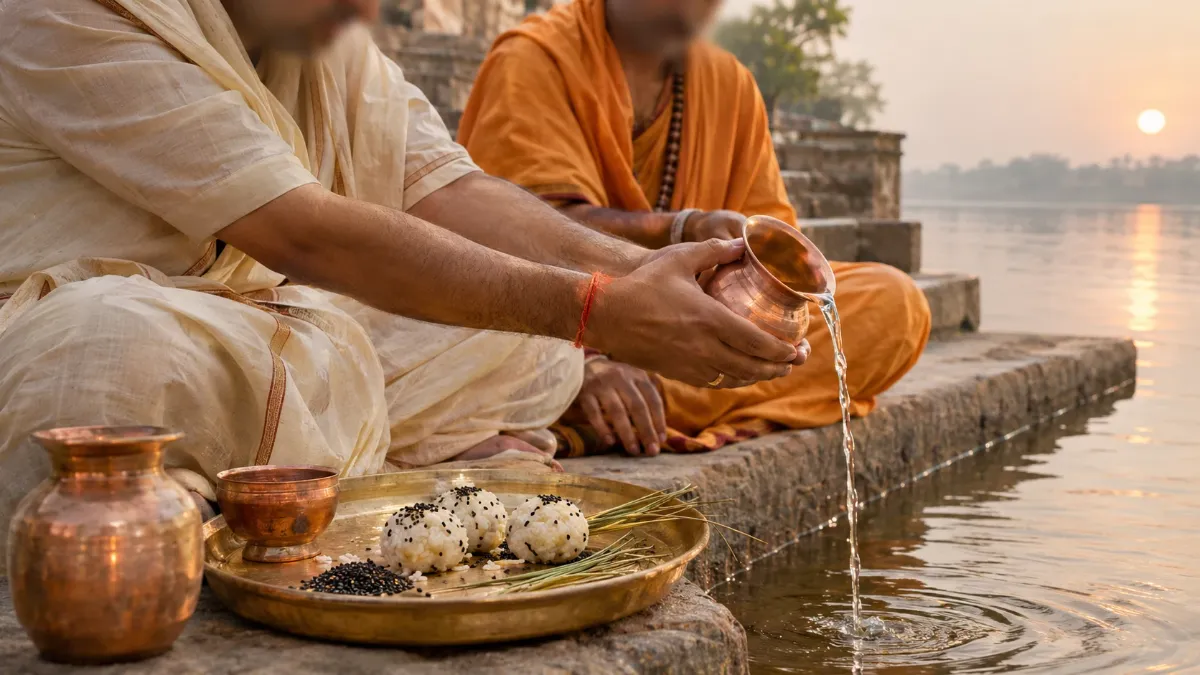
An offering of water with prescribed invocations. Black sesame and kusha grass are commonly used in Pitru Tarpan.
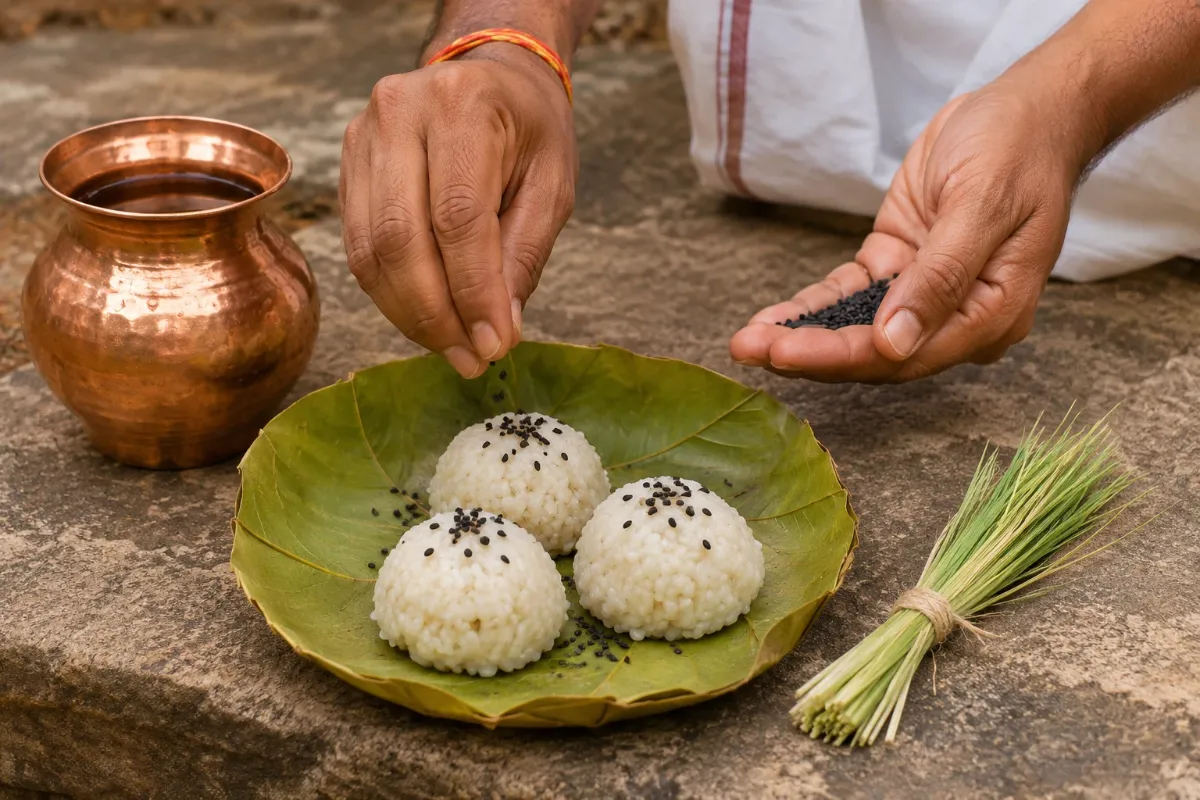
The pinda offering
An offering of prepared portions called pindas. Rice or barley and other ingredients are selected for the particular rite.
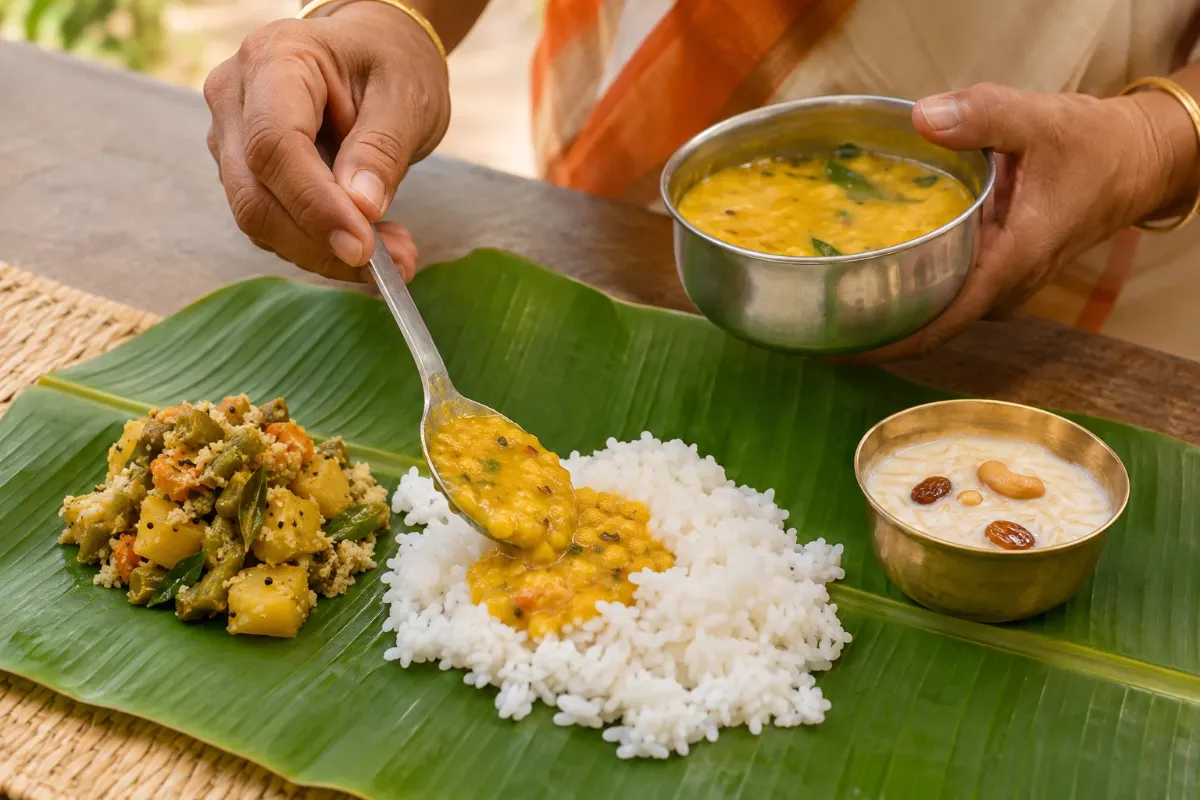
Food and thoughtful giving
Serving the recipients prescribed by the ceremony and giving food, clothing or other useful support within the family's means.
A complete Shraddha may include several of these practices. A simple water offering is not automatically the same as a full ceremony. Annual Shraddha on the death tithi and a pilgrimage Pind Daan also have different purposes. Ask which observance is appropriate before arranging a visit or buying materials.
Plan before the day
Begin with a short conversation with a family elder and the pandit. Share the names of the departed, their relationship to the person performing the rite and any known death tithi. Mention a recent death or any special family circumstance at this stage.
Write down the ceremony location and confirm the local date. Ask when you should arrive and when the actual offerings will begin. Leave enough time for travel, preparation and the meal. A reporting time is not necessarily the start of the ritual window.
Use this list for planning. Ask the pandit to confirm the quantities and any changes for your tradition. Tick each item as you arrange it.
Ask what the quoted amount includes. Confirm the pandit's fee, materials, meals and any venue charge. At a pilgrimage place ask which ritual sites are included and whether transport is needed. Choose a plan that your family can manage comfortably.
Prepare a clean space and keep the materials together. If food will be cooked elsewhere check when it will arrive and who will serve it. A simple organised ceremony is easier to follow than one interrupted by missing items.
If several relatives are helping give each person a clear task. One can check the family details while another arranges the meal and another prepares the materials. Keep one written list so that nobody buys the same item twice. For a ceremony away from home carry the details on paper as well as on your phone.
Share only the family information needed for the rite. There is no need to publish personal records or details about a death on a public booking page. Check the contact details and arrangements directly with the person who will conduct the ceremony.
The ritual guide
The following ten stages explain the shape of a common ceremony. They are not a universal prayer script. The mantras, order of offerings, number of pindas and role of each participant depend on the family's tradition.
The pandit checks the type of Shraddha, the selected tithi and the relevant period for the ceremony location. The family confirms the names and relationships. Before starting ask whether any special rule applies to your circumstances.
Bathe and wear clean clothing suitable for your custom. Arrange the vessels, ingredients and seats. The pandit guides purification and the initial actions of the rite. Sit where instructed so that the required offerings can be made comfortably.
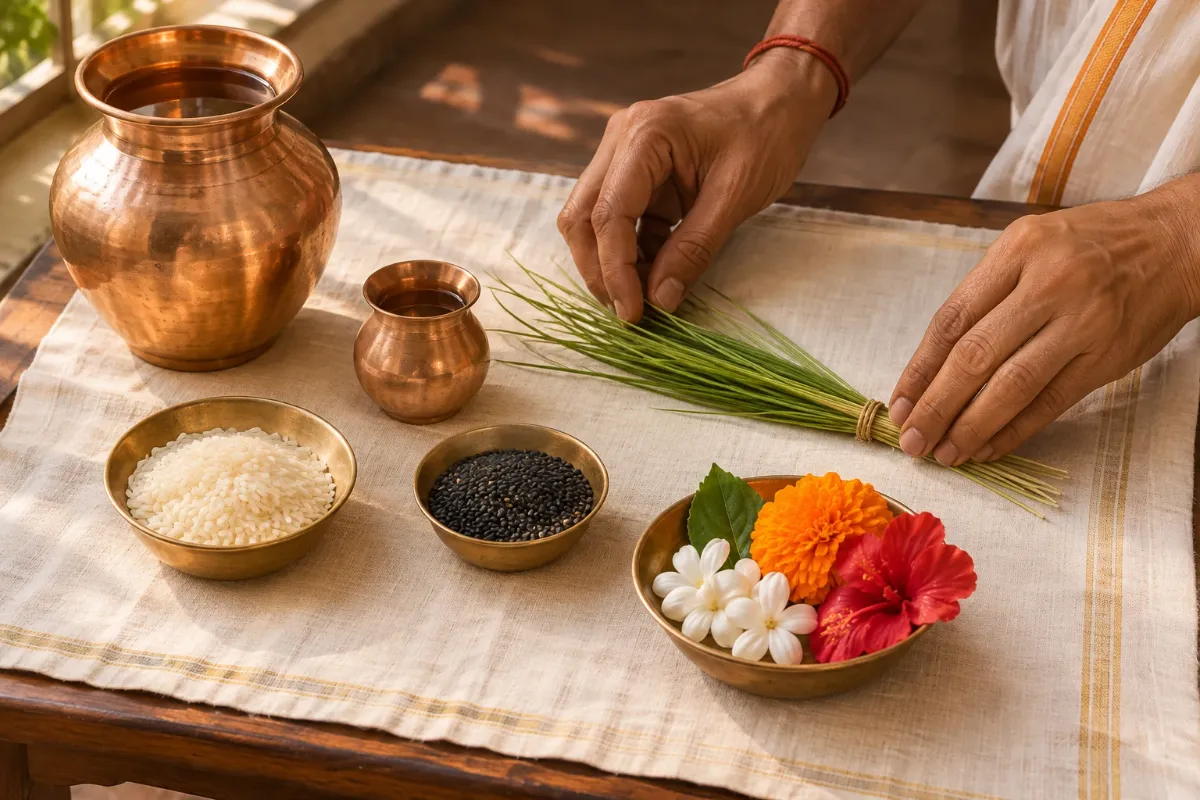
Sankalpa is the statement of intention. The pandit guides the declaration of the occasion, place and ancestors being remembered. Repeat or affirm the words as directed. If a name or gotra is unknown say so before this stage.
The ceremony may include prayers to Vishnu, the Vishwadevas or other invocations required by the tradition. The pandit arranges the ritual space and explains what the family should offer. These details can differ even between families in the same town.
The prescribed ancestral names and relationships are recited. The family offers respectful attention and participates as guided. Give the pandit the correct details beforehand so that this part remains calm and unhurried.
During Tarpan the person performing the rite offers water with the required invocations. Sesame or kusha may be used. Follow the pandit's instructions for direction, hand position and sacred thread where applicable. Some traditions place Tarpan later in the ceremony.
Where Pind Daan is part of the rite the pindas are prepared from the agreed ingredients. The pandit guides their number, placement and offering. Do not assume that a photograph or a different family's ceremony gives the correct arrangement for yours.
The family presents the prescribed food and serves the invited recipients respectfully. Some traditions include separate portions for animals or birds. Arrange these according to the rite and local conditions. Keep the food clean and avoid leaving it where it becomes litter.
Offer the agreed dakshina to the pandit and complete any prescribed gifts. Additional food donation or support for people in need can reflect your family's means. Ask questions if an unexpected addition is proposed before agreeing to it.
The pandit leads the closing prayers and completion of the rite. Follow the venue's instructions for remaining offerings. Collect packaging and leave the space clean. Record the observance and the advice received so that your family can prepare more easily next time.
Which tradition will you follow? What should the family prepare? Who will make the offerings? Is a meal included? How long should we allow? What is the total cost? A clear discussion before the day helps everyone participate with understanding.
Ask for brief explanations in a language the family understands. If you need help repeating a name or a phrase say so. You do not need to pretend that you know every Sanskrit word. Understanding the purpose of each action helps the occasion remain thoughtful.
Sacred places
Choose a place that suits your family tradition and the rite you plan to perform. Shraddha can also be arranged at home or at a suitable local place. Ask your priest how a pilgrimage ceremony relates to your regular annual observance.
Distances are approximate and refer to the city or place named. The final ceremony point may need a local transfer. Check current transport services and access before booking.
Bihar
Gaya is a major centre for Pind Daan. Traditional places include Vishnupad Temple and the Falgu River. A ceremony may also include Akshayavat and other sacred sites. Bihar Tourism names these places in its pilgrimage information.
How to reach Gaya Ji
By air
Uttarakhand
Brahma Kapal is beside the Alaknanda at Badrinath. The temple committee describes it as a place for Shraddha and homage to departed family members.
How to reach Brahma Kapal at Badrinath
By air
Gujarat
Bindu Sarovar is especially associated with Matru Shraddha for departed mothers. Gujarat Tourism describes this tradition at Sidhpur and the sacred water bodies near Kapilamuni Ashram. This association does not mean that mothers can only be honoured here. Your regular family observances follow your own tradition.
How to reach Bindu Sarovar at Sidhpur
By air
Uttar Pradesh
Families perform Shraddha at suitable Ganga ghats in Kashi. Pishach Mochan is another traditional place for ancestral rites. Akashvani has reported these observances at the ghats and Pishach Mochan during Pitru Paksha.
How to reach Varanasi
Uttarakhand
Haridwar has established places for Tarpan and other ancestral rites along the Ganga. Narayani Shila is also associated with these observances. Akashvani has documented pilgrims performing Tarpan there during Pitru Paksha.
How to reach Haridwar
Uttar Pradesh
Triveni Sangam is a major pilgrimage place where the Ganga and Yamuna meet. The Saraswati belongs to the sacred tradition of the confluence. The district website describes priests assisting pilgrims with puja at Sangam. For ancestral rites ask a local priest about the procedure and suitable location.
How to reach Triveni Sangam at Prayagraj
By air
Tamil Nadu
Agni Theertham is the sacred shore near Ramanathaswamy Temple. Families visit for Tarpan and offerings in memory of departed relatives. A direct PTI report documents these rites at the shore.
How to reach Agni Theertham at Rameswaram
By air
Maharashtra
The Trimbakeshwar area has a tradition of ancestral rites near sacred waters. Maharashtra government information also records Narayan Nagbali among the ceremonies performed here. It is a special rite with its own purpose. Ask the priest whether it is relevant to your family rather than treating it as a requirement for everyone.
How to reach Trimbakeshwar
By air
Haryana
Pehowa is an ancient pilgrimage town in Kurukshetra district. The district administration identifies it as a major place for Pind Daan and Shraddha. Ask your family priest whether this tradition suits the ceremony you plan.
How to reach Pehowa
By air
Dos and don'ts
Customs vary by region and household. Some families follow restrictions throughout the fortnight. Others observe them mainly on their Shraddha day. Discuss the expectations with your family before making plans.
Many observant households avoid meat and alcohol. Some also avoid onion, garlic or particular foods. Rules about haircuts, shaving, new clothes and major celebrations are family customs rather than a single rule followed by all Hindus.
Some families postpone weddings or a housewarming. Daily work, study and necessary responsibilities can continue. Do not assume that everyone must fast. Ask what your own observance requires and plan a manageable day.
Remembrance at home
Many families arrange Shraddha at home. A river journey or an expensive venue is not required for every observance. For a formal ceremony ask a knowledgeable pandit to guide the procedure that your family follows.
If you want a quiet personal observance you can make time to remember the departed, speak their names and offer a prayer. You might share a family story with children or give a meal in an ancestor's memory. These are meaningful acts of remembrance without claiming to complete a formal Shraddha.
If you wish to make a water offering first learn the form appropriate to you. Do not assemble a formal Tarpan from unrelated instructions online. The person performing it and the names used can depend on family circumstances.
Keep the observance within your means. When a formal ceremony is difficult to arrange ask the family priest about an appropriate alternative or later observance.
Different family situations
A complete guide cannot decide every family's ritual responsibility. Share these circumstances with the pandit before the ceremony so that the advice fits your situation.
| Situation | What to discuss |
|---|---|
| A recent death | First year rites have a separate sequence. Ask about the first Pitru Paksha, monthly observances and annual Shraddha. Sapindikarana timing varies across traditions. |
| Daughters or other relatives leading | Women lead ancestral rites in some traditions. Confirm the role of each participant with a pandit who understands the family's practice. |
| A mother or grandmother | Female ancestors are included in remembrance. Ask how their names and family relationships should be stated. Navami has a special association with female ancestors in some traditions. |
| Parents who are living | The formal ancestral sequence and the person entitled to perform it may differ. Ask which offerings are appropriate for you rather than copying another family's sequence. |
| An accidental or violent death | Some traditions observe a special Chaturdashi rite. Ask for guidance specific to the circumstances without assuming that a generic ceremony is sufficient. |
| A departed renunciant | Renunciants may have separate observances. Dwadashi is associated with Sannyasi Shraddha in some traditions. Confirm the applicable practice. |
Traditional sources themselves describe different rules for different rites. The Dharma Sindhu explanation hosted by Kanchi Kamakoti gives several timings for Sapindikarana. This is why recent death instructions should come from the priest guiding the family's observances.
If relatives disagree try to settle the practical arrangements before the day. Give the pandit a single clear list of questions. Remember that a grieving family may need patience as much as it needs information.
Keep a short family record after the ceremony. Note the tithi, location, names included and the priest's advice. This can help the next generation continue the custom without relying only on memory. Record any uncertainty honestly so that it can be clarified later.
Common questions
Sarva Pitru Amavasya is commonly used for collective remembrance and for ancestors whose tithi is unknown. Tell the pandit what records you have. Do not guess a tithi from the Gregorian date alone.
Say so honestly. Give the person's name and relationship instead of inventing a lineage. The pandit can explain the wording used in the family's tradition when a detail is unknown.
Annual Shraddha generally follows the relevant lunar month, paksha and tithi. Pitru Paksha remembrance follows its own rules. Keep the original death details so that a knowledgeable person can identify the appropriate observance.
The preceding Purnima Shraddha and Mahalaya remembrance are distinct. In a common convention, Mahalaya remembrance for a person who died on Purnima is observed on Sarva Pitru Amavasya. Confirm your family's practice rather than selecting a date by name alone.
Yes. Arrange guidance for the place where the ceremony will take place. Use the local date and ritual period. If a priest performs a ceremony on your behalf in India confirm the arrangements for that Indian venue separately.
Ask the family priest about an appropriate later observance. Sarva Pitru Amavasya may be relevant during the fortnight. The answer depends on the kind of rite that was missed. Avoid assuming that a missed date brings harm to the family.
Offering food to crows is a familiar custom in many regions. It is not practised identically everywhere. Ask what your ceremony requires and follow local rules. The absence of a crow is not a reason to make frightening claims about the departed.
Gaya is a major place of pilgrimage for ancestral rites. Home Shraddha and rites at other traditional places are also practised. Choose a place with family guidance and consider the needs of those travelling.
Do not assume that it does. A pilgrimage Pind Daan and annual Shraddha have different purposes. Ask the priest who guides your family what should continue after the pilgrimage and keep that advice with your family records.
Charity is a valuable act of remembrance. It should not automatically be described as a substitute for every prescribed rite. If you cannot arrange a ceremony ask about an appropriate observance within your circumstances and means.
Sources and editorial care
The dates and times on this page are calculated by Dina Panchang for the city you choose. Each Shraddha is placed on the day whose Aparahna holds its tithi, following the traditional rule. Links beside the sacred place descriptions identify their sources. Religious benefits are presented as matters of faith.
Image credits. The photographic illustrations were created with AI for this guide. They show generic scenes rather than documented ceremonies or named pilgrimage places. The mandala artwork is Dina Panchang's own.
Ritual note. This is an educational guide. It has not been certified by an officiating priest. Family customs may differ. Confirm the rite, the tithi and the ceremony time with the pandit who will lead it.
Monday, 16 September 1940 to Tuesday, 1 October 1940
Times are for Delhi. Kutup and Rauhin are the eighth and ninth muhurtas of the day, Aparahna its fourth part.
Some traditions use Chaturdashi for ancestors who died in accidents or other violent circumstances. It should not be selected automatically just because the death tithi was Chaturdashi. A recent death may also require separate rites. Explain the circumstances to a knowledgeable pandit who follows your family tradition.
Sarva Pitru Amavasya is commonly chosen when the death tithi is not known or an earlier observance was missed. Tell the pandit what information you have. Do not invent a name or tithi. Maha Bharani and Magha Shraddha, shown in the table, are additional nakshatra observances. They do not replace every family's usual Shraddha day.
Fly to Gaya International Airport then arrange a road transfer to the Vishnupad area. Patna Airport is another option with a longer onward journey.
By road
Approach Gaya through the NH 19 and NH 22 road network. Patna is about 120 km from Gaya by the district's road reference.
By bus
Bus connections to Gaya are listed from Patna, Ranchi and Varanasi. Continue from the arrival stand by local transport to the agreed meeting point.
Final approach
Ask which vedis your ceremony includes. The final approach can involve walking so agree on a suitable meeting point for older relatives.
Travel references: Gaya pilgrimage travel guide · Gaya district travel guide
Jolly Grant Airport near Dehradun is the main air gateway. The temple committee places Badrinath about 314 km away by road.
By road
Travel from Rishikesh through Devprayag, Rudraprayag, Karnaprayag and Joshimath to Badrinath. This is a long mountain journey with weather dependent access.
By bus
Buses to Badrinath are listed from Rishikesh and other Uttarakhand towns. Services depend on the season and road access.
Final approach
Brahma Kapal is near the temple by the river. Confirm the exact meeting point and walking access. Check official yatra dates and road conditions before travel.
Travel references: Temple committee travel guide · Chamoli district travel guide
Ahmedabad Airport is the main air gateway. The Patan district guide places it about 115 km from Sidhpur. Continue by road to Bindu Sarovar.
By road
Sidhpur is connected by national and state highways. Arrange a car transfer from Ahmedabad or another nearby town and name Bindu Sarovar as your destination.
By bus
State transport buses connect Sidhpur with towns and cities in Gujarat. Use the arrival stop that is most suitable for Bindu Sarovar.
Final approach
Confirm whether your priest will meet you at Bindu Sarovar or Kapilamuni Ashram. Ask about the easiest entrance and local transfer before arrival.
Travel references: Patan district travel guide
By air
Lal Bahadur Shastri International Airport at Babatpur is about 22 km from Varanasi by the district reference. Allow a separate transfer to your chosen ghat.
By road
Varanasi has highway connections with Prayagraj, Lucknow and other regional cities. Ask the driver to use the permitted drop point for your ghat or Pishach Mochan.
By bus
UPSRTC and other bus services reach Varanasi. Continue from your arrival stand by local transport to the agreed ceremony point.
Final approach
Some old city routes restrict larger vehicles. Confirm the walking distance and steps before choosing the final approach.
Travel references: Varanasi district travel guide
By air
Jolly Grant Airport near Dehradun is about 37 km from Haridwar by the district reference. Continue by road to your agreed ceremony location.
By road
Haridwar is connected by road with Delhi and nearby states. Decide the local drop point in advance because different ghats and Narayani Shila have different approaches.
By bus
State transport and private buses connect Haridwar with Delhi, Haryana, Uttar Pradesh, Punjab and other parts of Uttarakhand.
Final approach
Ask the priest to name the exact ghat or temple. Confirm walking access and follow the local instructions at the river.
Travel references: Haridwar district travel guide
Fly to Prayagraj Airport at Bamrauli then arrange a road transfer to Sangam. The airport is about 12 km from the city by the AAI reference.
By road
Prayagraj is linked to regional cities through national and state highways. Follow the current local approach and parking arrangements for Sangam.
By bus
UPSRTC services use terminals including Civil Lines and Zero Road. Confirm the terminal for your route then continue to Sangam by local transport.
Final approach
Agree on the riverbank meeting point. If a boat is part of the plan confirm it separately and use the permitted boarding area.
Travel references: Airports Authority of India · Prayagraj district travel guide
Madurai Airport is about 175 km from Rameswaram by the district reference. Arrange a road transfer and allow time for arrival at the temple area.
By road
Reach Rameswaram through Ramanathapuram and the Pamban approach. Confirm the local drop point for Agni Theertham with your priest.
By bus
Rameswaram has a bus terminus with services from major Tamil Nadu towns and cities. The district places the bus stand about 2 km from Ramanathaswamy Temple.
Final approach
Continue from the bus stand or parking area by local transport as permitted. Arrange sea access and any temple visit separately.
Travel references: Ramanathapuram district · Rameswaram Municipality · Pamban approach
Nashik Airport at Ozar is the nearby air gateway. The Ministry of Tourism lists it about 55 km from Trimbakeshwar. Continue by road.
By road
Trimbakeshwar is about 30 km from Nashik by road. Use Nashik as your arrival base and arrange the onward journey to the temple town.
By bus
State transport buses connect Nashik with Trimbakeshwar. Use the departure stand shown for your chosen service.
Final approach
Confirm the actual ritual venue with the priest. A ceremony near the sacred waters may use a different meeting point from the main temple entrance.
Travel references: Nashik district travel guide · Ministry of Tourism
Chandigarh Airport is a practical air gateway for the Kurukshetra region. Delhi Airport is another option. Arrange the onward road journey specifically to Pehowa.
By road
Reach the Kurukshetra region through NH 44 then continue towards Pehowa. The district's Prachi Tirth reference places the site about 35 km from Pipli.
By bus
Haryana Roadways connects Pehowa with Kurukshetra and other towns. The official bus stand directory provides Pehowa and Kurukshetra enquiry contacts.
Final approach
Confirm the exact tirth and priest's meeting point before leaving the bus stand. Different local ceremony sites should not be treated as one address.
Travel references: Kurukshetra district · Prachi Tirth directions · Haryana Roadways